BBQ catering for 50 to 100 guests in Singapore is not just a scaled-up 20-pax home gathering.
Food needs to land hot, the grill needs pace, and the host should not be stuck at the fire.
At this scale the format conversation matters more than the menu conversation. A drop-off order that works for 20 guests starts to leave food cold for 80. A single live grill that paces a 30-pax dinner cleanly starts to bottleneck above 60.
This guide shows how 50 to 100 pax BBQ catering scales.
It covers when to add grill stations, which venues fit the headcount, how service should pace, and what details to send before asking for a quote.
Quick answer: how 50 to 100 pax BBQ catering works
Plan around grill capacity, pacing, and venue access before menu.
For 50 to 100 guests, start with how food will come off the grill, not only the menu list.
One chef on one live grill can usually feed around 50 to 60 guests across an evening.
Above that, plan for two stations or a chef-led team.
From there, the venue, the service flow, and the headcount confirmation timing matter as much as the menu choice. The right format keeps food hot for the last guest, not just the first table.
Why headcount changes the catering format
A 20-guest BBQ and an 80-guest BBQ need different service plans.
At 20, a generous spread plus one grill usually covers the night.
At 80, one grill can slow the queue and leave the host managing pacing instead of enjoying the event.
The fix is not more food. It is a different service shape: paced waves of grilled cuts instead of one big serve, multiple stations instead of one grill, and a chef team that can keep food moving while guests circulate.
- Service shape: large groups need waves of grilled food, not a single big serve.
- Grill capacity: one chef on one grill caps out around 60 guests for live-grilled cuts.
- Pacing: 50 to 100 pax events almost always have arrivals across a window, not all at once.
- Logistics: more guests usually means more dietary needs, more venue access constraints, and more cleanup planning.
- Host attention: above 50 guests, someone else should usually own the grill.
How Sunday Roast service formats scale to 50 to 100 pax
Each Sunday Roast format scales differently as guest count grows. Some work well up to about 60 guests with one grill and a buffet table. Others rely on a chef team and multiple stations to keep pacing clean above that.
Pick the format that fits the guest count, the venue, and how much hosting load you want to keep on the day.
- Food-only delivery: best for casual gatherings up to about 50 guests where someone is happy at the grill and timing is flexible.
- Hosted setup with grill rental: works to about 60 guests when someone can run the grill and pace the buffet table.
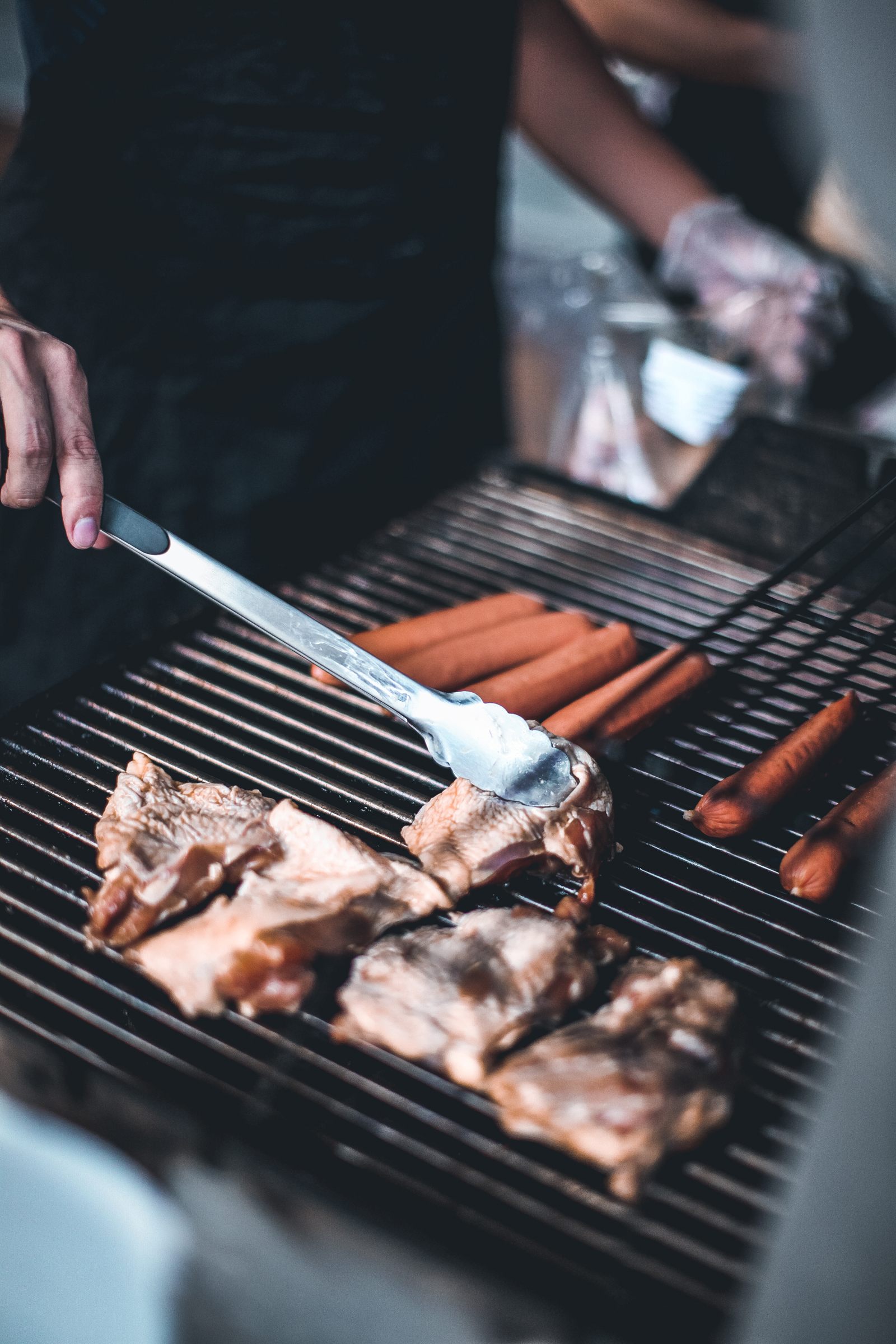
- Live grilling support (single station): a Sunday Roast team handles one grill and paces food in waves; comfortable up to roughly 60 guests.
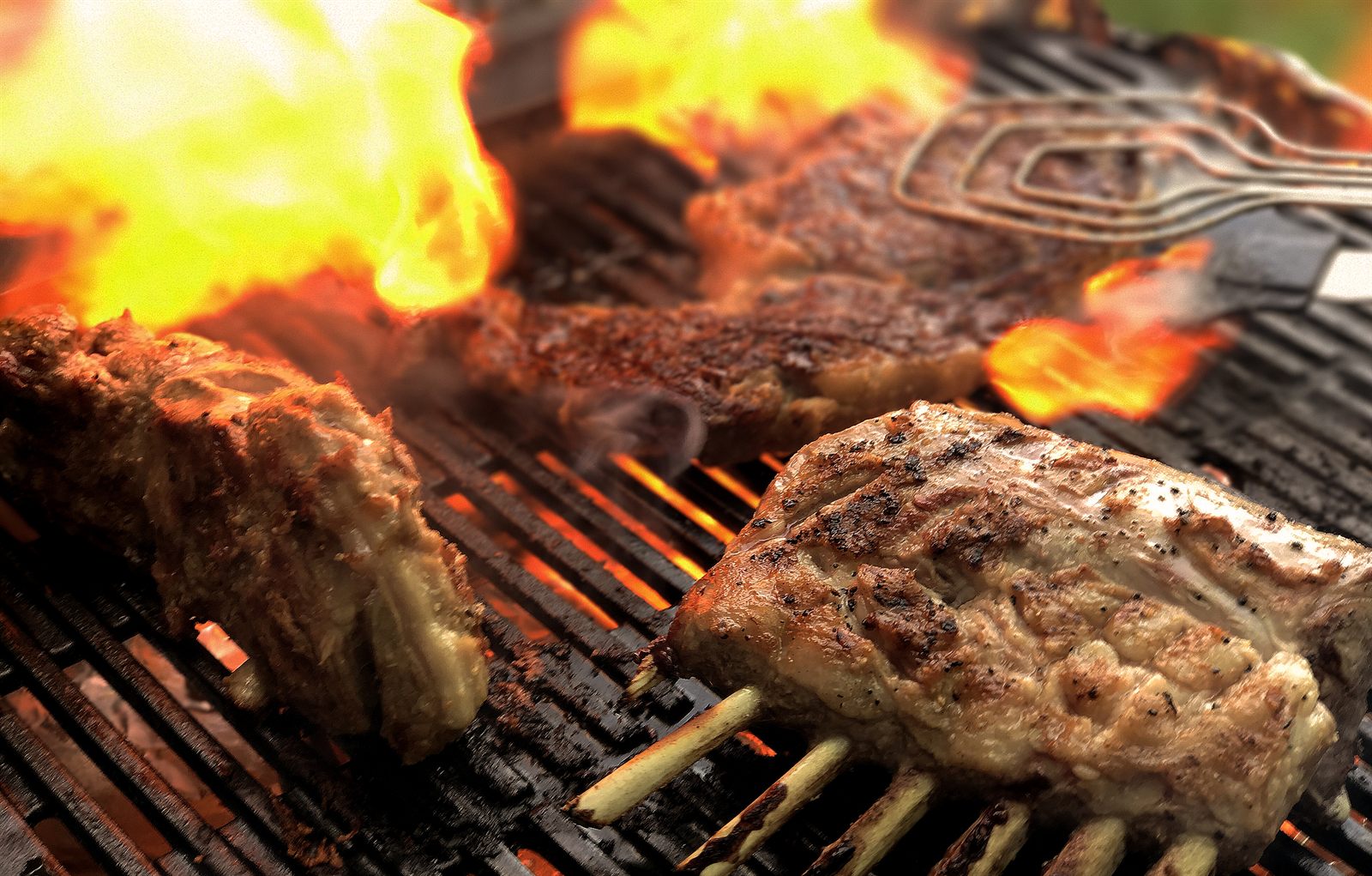
- Live grilling support (multiple stations): two grill stations and a chef team keep pacing clean from 60 to 100+ guests across most venues.
- Omakase BBQ: not the right format above 30 guests; the chef-led tasting flow loses pace at higher counts.
Grill stations and chef-team planning by guest count
Start from grill capacity and work backwards.
One chef on one live grill can pace cleanly for around 50 to 60 guests when the menu is balanced and arrivals are spread out.
Pushing past that with a single grill usually means food slows or sits warming, which guests notice.
Above 60 guests, two stations or a larger chef team keeps pacing comfortable. The exact split depends on the menu mix: more seafood and premium cuts need more chef attention; bratwurst and chicken-led menus pace faster off a single grill.
Venue and access requirements at 50 to 100 pax
Most Singapore venues that handle 50 to 100 pax BBQ well share a few traits. They have a sheltered or backup space, room for at least two service tables, an outdoor or ventilated grill zone, and clear loading-bay access for catering vehicles.
Good venue examples include corporate function rooms with outdoor terraces and condo clubhouses paired with the BBQ pit and pool deck.
Rooftop event spaces, larger landed homes with garden access, and event venues with catering kitchens can also work well.
- Sheltered backup space: at 50+ guests, weather contingency stops being optional.
- Service flow: room for at least two food tables and a grill zone separate from seating.
- Loading-bay access: catering vehicles need access for setup and teardown.
- Power and ventilation: some venues restrict gas, charcoal, or open flames in covered areas.
- Restroom and water access: 50+ guests need clear amenity provisioning.
- Cleanup: more guests means more volume; check whether the venue handles disposal or whether catering does.