Choosing the food is one of the best parts of planning a BBQ. Here is a closer look at the beef, lamb, seafood, pork and chicken on our menus, and how to put together a spread your guests will enjoy.
This guide walks through the cuts Sunday Roast uses across its BBQ catering tiers: NZ beef, lamb, seafood, pork, and chicken.
It explains how each cut behaves on the grill, what it suits, and how to mix the spread across an evening.
Use the ideas here to choose your favourites and tell us what you would like to serve.
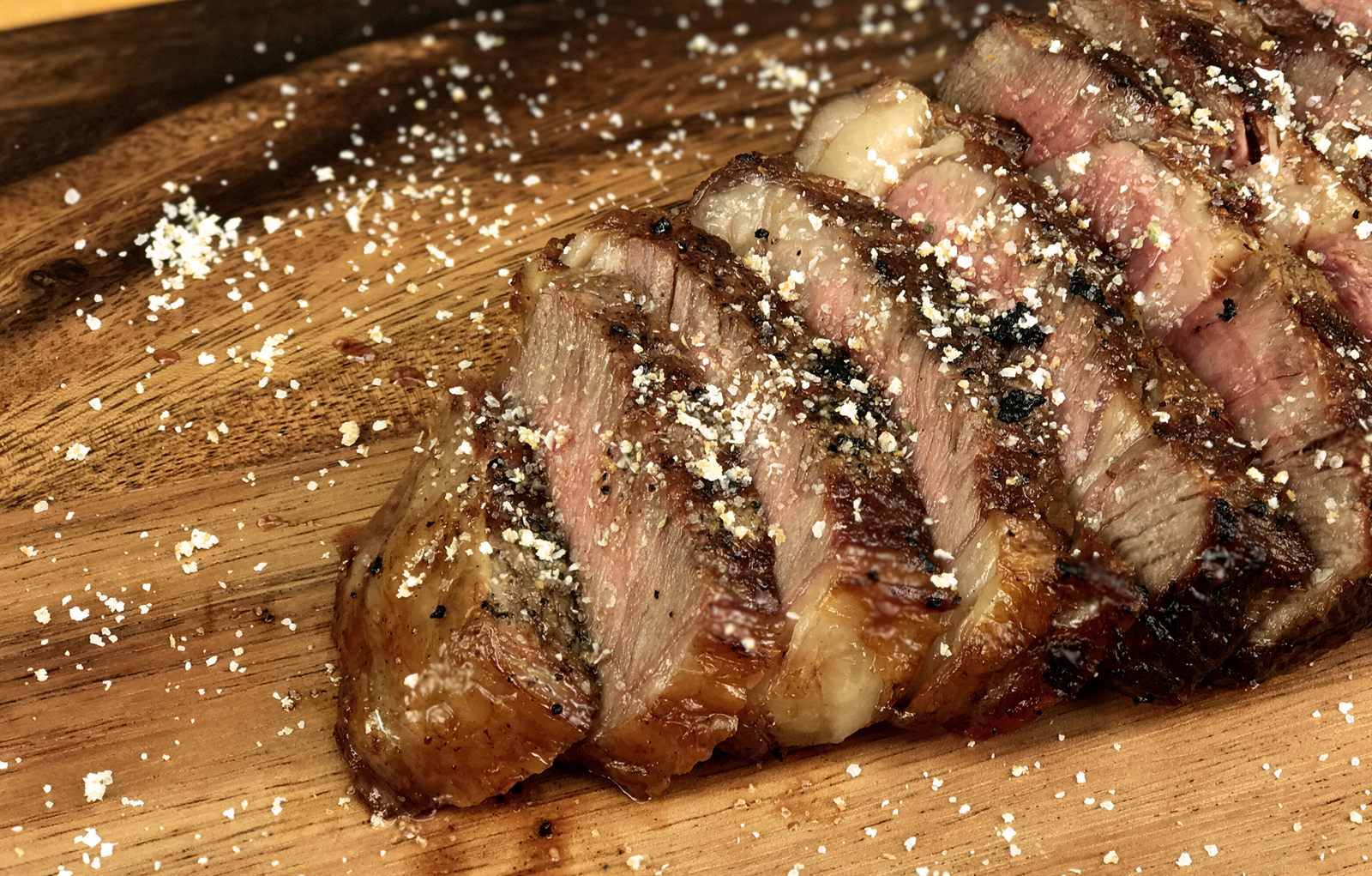
NZ beef cuts: ribeye, Angus bone-in, brisket
Our menus use New Zealand beef, with different ribeye cuts available by package.
The two cuts that matter most across the omakase tiers are NZ Prime Steer ribeye and NZ Angus bone-in ribeye.
Starter includes NZ Prime Steer ribeye alongside Cajun chicken and chicken bratwurst.
Premium adds NZ Angus bone-in ribeye, grain-fed for 160 days.
Brisket and other slower cuts are less common at smaller events because they need long cooks. They are more typical of larger 50 to 100 pax setups where there is room to run a longer fire alongside the faster cuts.
- NZ Prime Steer ribeye: included from the Starter tier.
- NZ Angus bone-in ribeye, grain-fed for 160 days: added in the Premium tier.
- NZ ocean beef ribeye: a chilled air-flown ribeye option used across the line, typically cooked medium to keep the centre rosy.
- Brisket and slower cuts: less common at small events; a real fit for 50 to 100 pax bookings with longer event windows.
Lamb cuts: chops, racks, cutlets
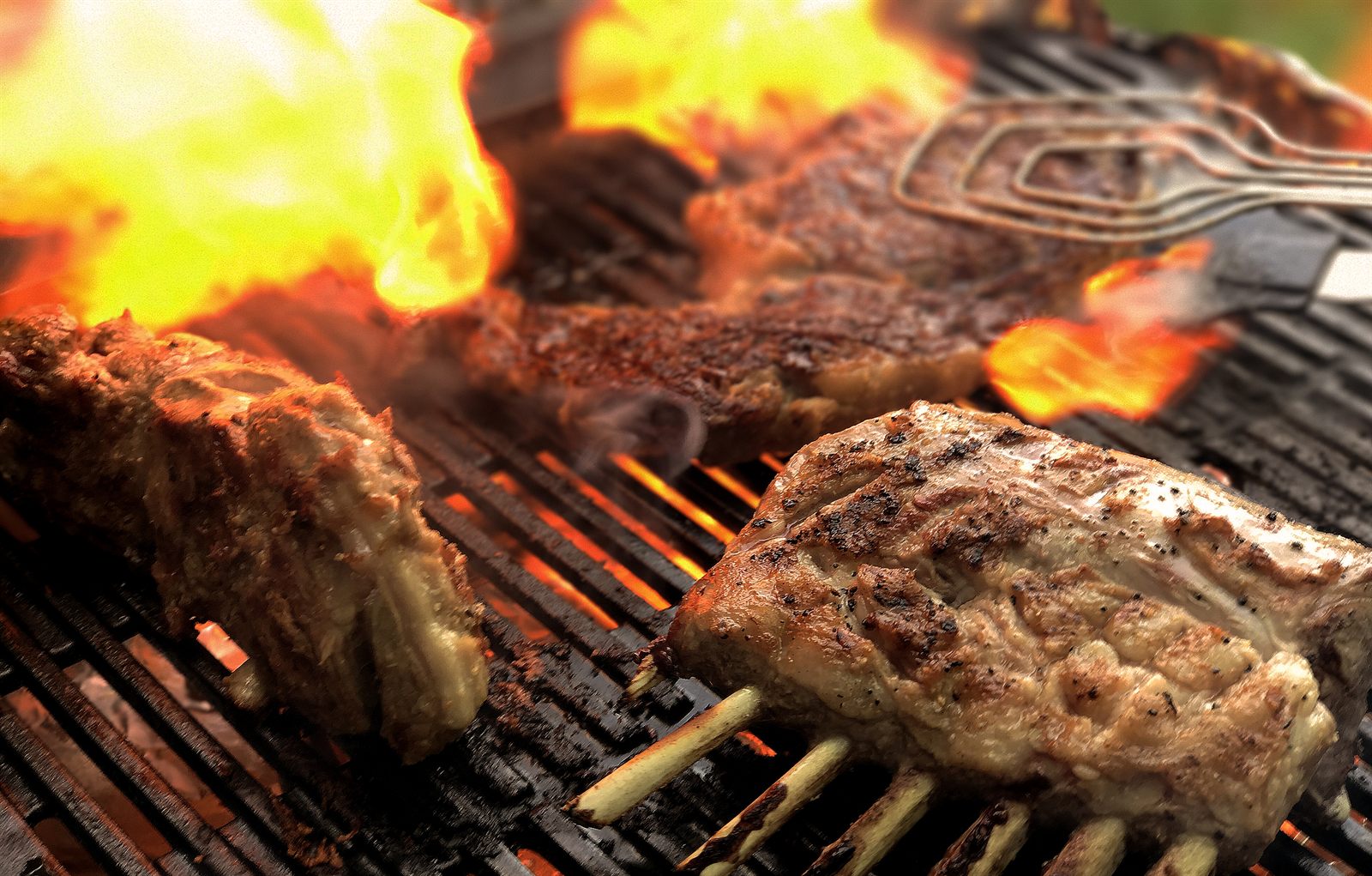
Lamb shows up across the premium tiers and pairs naturally with beef on a Sunday Roast spread.
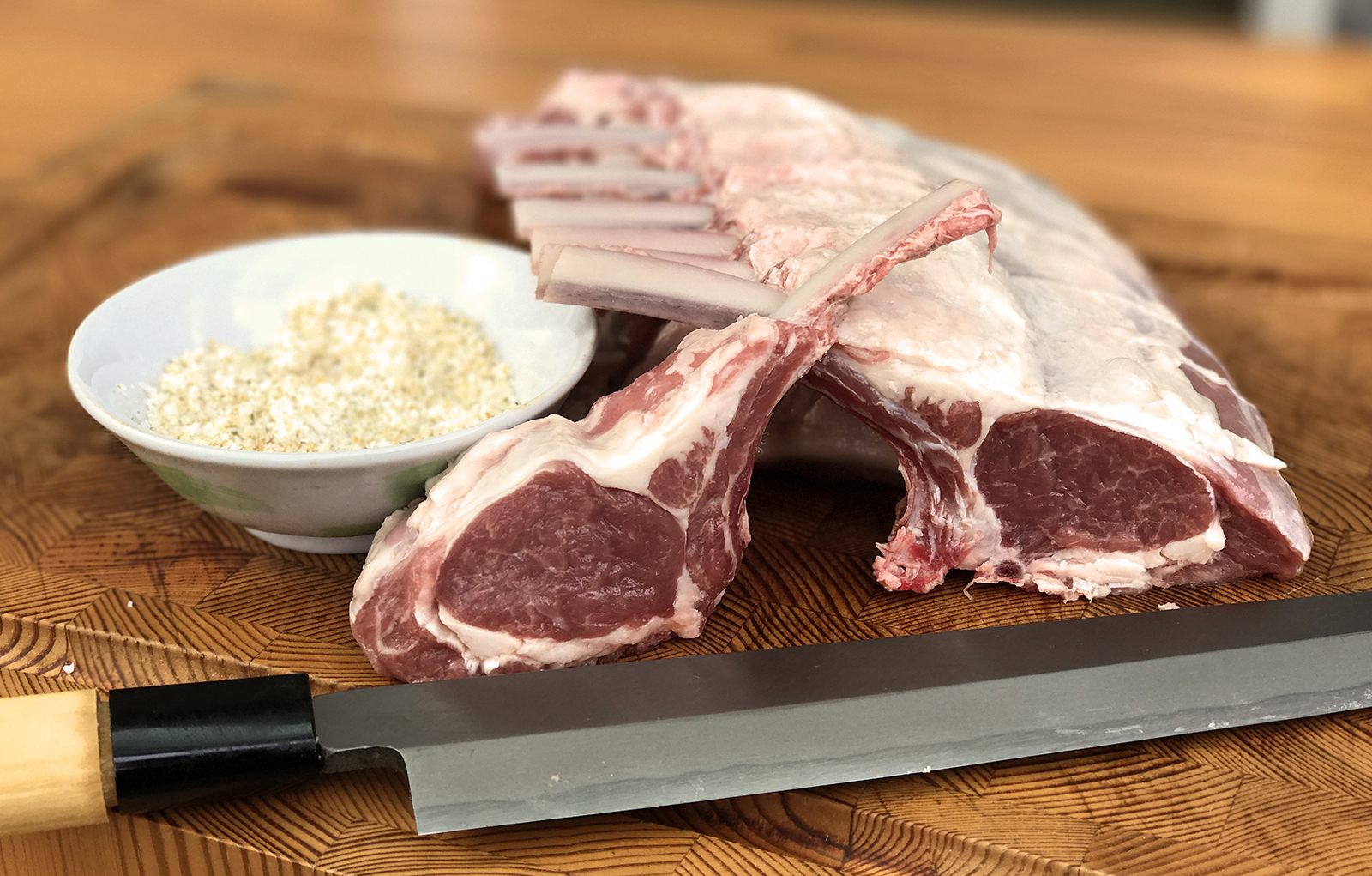
The two cuts you'll see most often are garlic herb lamb chops and NZ spring lamb racks.
Cutlets are another option to discuss for a smaller dinner.
Garlic herb lamb chops are included from the Premium tier.
If you prefer a whole rack, ask how it would fit the menu and cooking time for your event.
For a dinner served in courses, ask about lamb cutlets and portion sizes.
- Garlic herb lamb chops: included from Premium, alongside the ribeye cuts.
- NZ spring lamb racks: ask us about portions and the cooking setup for your dinner.
- NZ spring lamb cutlets: an option to discuss for a dinner served in courses.
Seafood: prawns, salmon, unagi
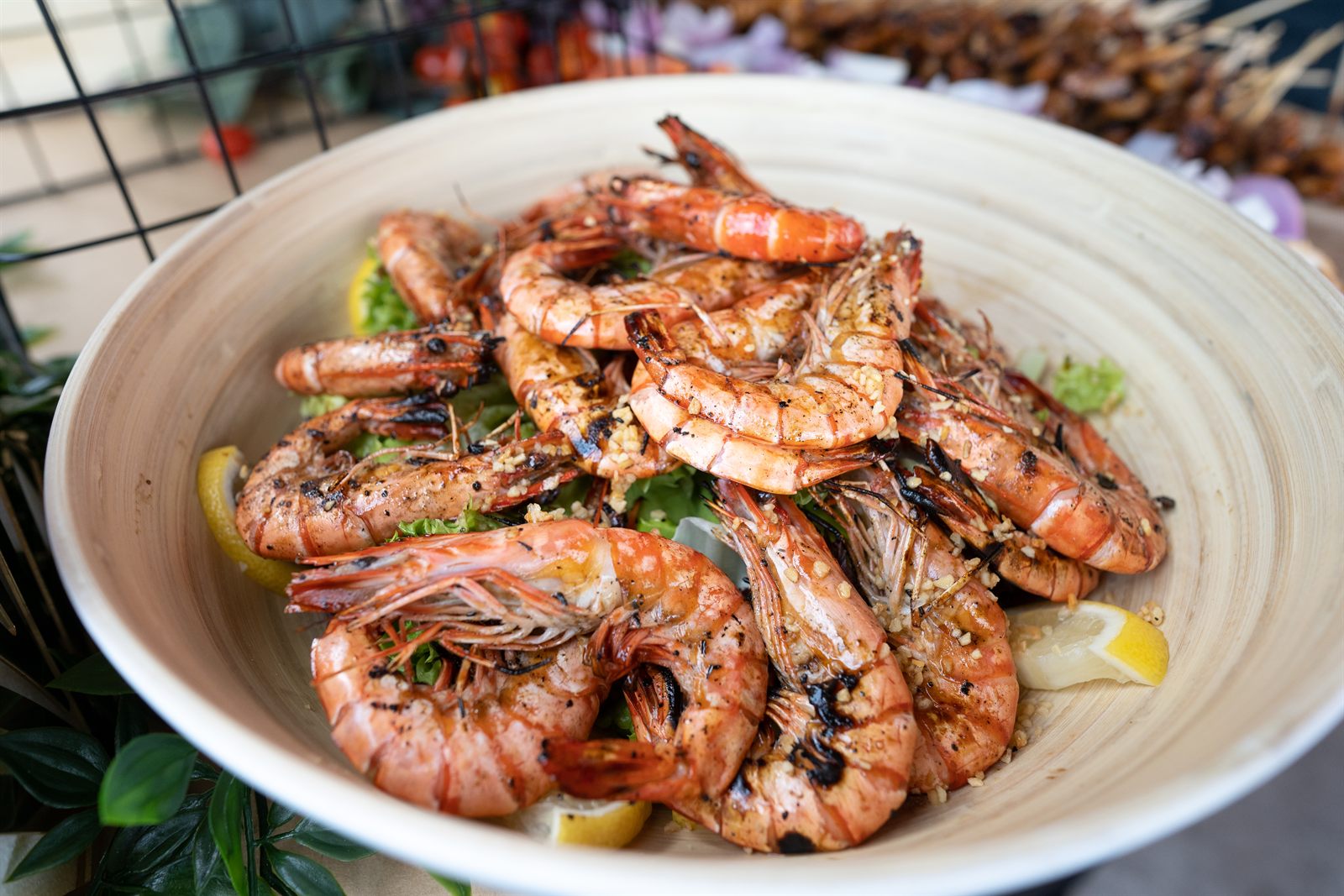
Tiger prawns are easy to share at a BBQ. Check whether they are included in your package or available as an add-on.
Salmon and unagi kabayaki are different.
Both are included in the Insider tier.
Salmon needs careful doneness control to stay silky, and unagi is finished with a glaze that can go too far quickly.
Plan to cook seafood in batches and serve it as it comes off the grill.
- Tiger prawns: a seafood option for sharing around the table.
- Grilled salmon: Insider-tier addition; benefits from chef-led doneness control to stay silky.
- Grilled unagi kabayaki: Insider-tier addition; needs chef attention for the glaze finish.
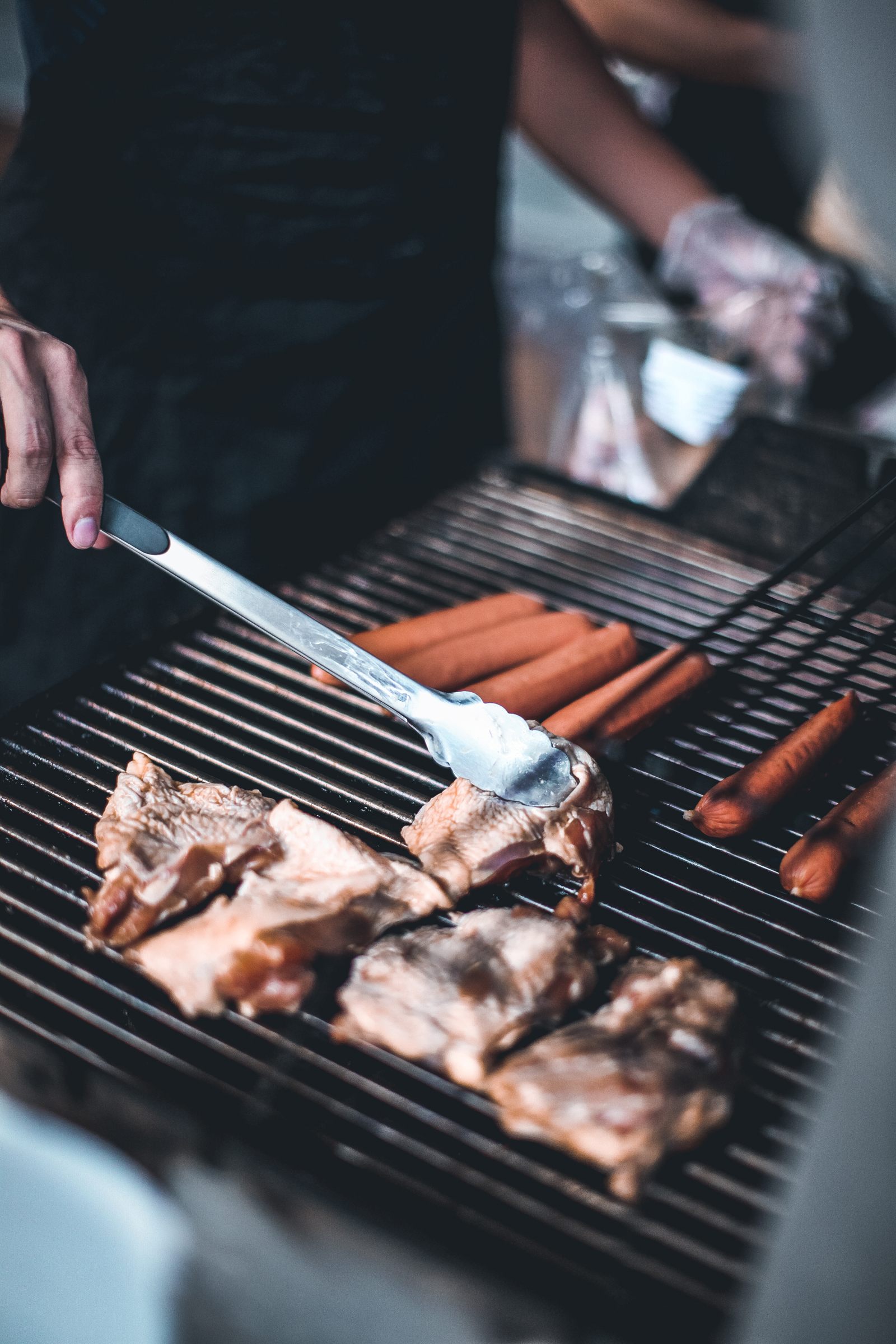
Pork and chicken: bratwurst and Cajun chicken thigh
Chicken and sausages give guests another choice alongside steak and seafood. They are included in our standard menus.
Two of these come up across most tiers.
Starter includes our signature Cajun chicken thighs.
Jumbo chicken bratwurst is also included from Starter.
Premium adds smoked pork bratwurst. Check guests’ dietary needs before choosing between the chicken and pork options.
- Signature Cajun chicken thigh: included from Starter.
- Jumbo chicken bratwurst: included from Starter.
- Smoked pork bratwurst: added in Premium.
Plan the cooking order
Before cooking, work out what will go on the grill first and what can cook together.
Cooking times depend on the cut, its thickness and the grill. A single timetable will not suit every BBQ.
If you are adding our chefs, discuss the cooking order and mealtime with the team.
If you are grilling yourselves, make sure the person cooking is comfortable with the cuts you choose.
Allow time for each batch and avoid filling the grill with more food than you can look after.
- Chicken, sausages, lamb and prawns need their own cooking times; do not use one time for the whole batch.
- For ribeye and salmon, plan around the thickness and portion size.
- Ask about cooking time and grill space before adding a bone-in ribeye, lamb rack or brisket.
- Keep an eye on the salmon, glazed unagi and steaks as they cook.
How to choose a balanced spread
Start with the foods your guests like. A mix of steak, chicken or sausages, seafood and sides gives people a choice.
Use the guest count to work out quantities, then check the package portions before adding extras.
For a small dinner, you might choose a favourite steak cut or seafood dish to share.
For a larger group, make sure there is enough of each dish for everyone who wants it.
- Smaller dinner: choose a few favourites, with sides to go with them.
- For 30 to 50 guests: check the portions and grill capacity before adding more dishes.
- For 50 to 100 guests: agree the food quantities, cooking roles and serving times early.
- Mixed dietary needs: tell us what guests can eat and whether certification is required before choosing the menu.